
New Hampshire Car Insurance Coverage Requirements
Free to compare
New Hampshire's Financial-Responsibility Rule
New Hampshire does not require most drivers to buy car insurance. The state operates under a financial-responsibility model: you must be able to prove you can pay for damages you cause, but you are not required to carry a liability policy unless you trigger a specific mandate—a DWI conviction, certain violations, or an at-fault accident where you could not pay. This confuses drivers moving from states where liability insurance is mandatory for everyone.
When you do carry coverage—either because you choose to or because the state requires it after a violation—the minimum liability limits are $25,000 per person for bodily injury, $50,000 per accident for bodily injury, and $25,000 for property damage. New Hampshire also mandates uninsured motorist coverage and personal injury protection when you buy a policy. Understanding what satisfies the state's rules when you cross from optional to required is the structural reality most drivers miss.
“New Hampshire does not mandate insurance for all drivers, but an at-fault accident without coverage triggers immediate license suspension until you prove ability to pay.”

Check Your Rate Against Other New Hampshire Drivers
Get My New Hampshire Car Insurance Quote$25,000/$50,000/$25,000
NH Minimum Liability Limits
New Hampshire's minimum liability coverage is $25,000 per person for bodily injury, $50,000 per accident for bodily injury, and $25,000 for property damage. These limits apply when you carry or are required to carry a policy.
New Hampshire Department of Safety
Who Must Carry Coverage in New Hampshire
You are required to carry liability insurance in New Hampshire if you have been convicted of DWI, if you caused an accident and could not prove financial responsibility at the scene, or if you committed certain violations such as leaving the scene of an accident or a second reckless-operation offense. The state also requires SR-22 filing for three years after these violations, which means a carrier must electronically notify the DMV that you hold a policy meeting the minimum limits.
If none of those conditions apply, you are not required to buy insurance. You can register and drive a vehicle without a policy as long as you can prove financial responsibility if asked—typically through a surety bond, a certificate of deposit, or cash deposited with the state treasurer. Most drivers choose to carry insurance anyway because an at-fault accident without coverage triggers immediate financial-responsibility requirements and potential license suspension.
Drivers who lease or finance a vehicle are required by the lender to carry comprehensive and collision coverage regardless of state law. The lender's contract overrides New Hampshire's optional-insurance rule for financed cars.
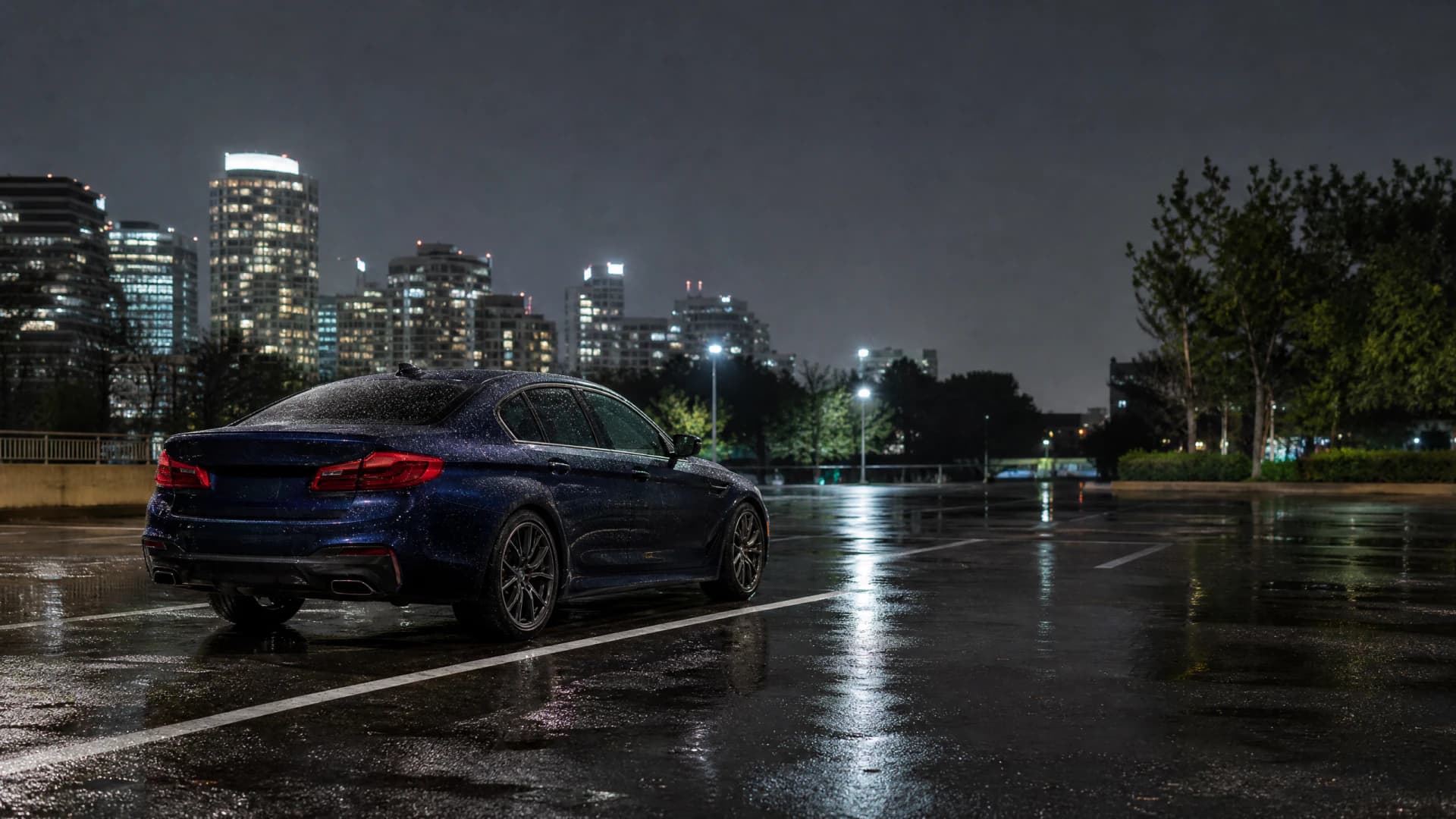
New Hampshire does not mandate insurance for all drivers, but an at-fault accident without coverage triggers immediate financial-responsibility requirements and can suspend your license until you prove ability to pay.





Optional Coverages and Full-Coverage Decisions
Collision and comprehensive coverage are optional in New Hampshire unless your lender requires them. Collision pays for damage to your vehicle after an accident regardless of fault; comprehensive pays for theft, weather damage, vandalism, and animal strikes. These coverages carry a deductible you choose when you buy the policy—typically $500 or $1,000—and the carrier pays the repair cost above that amount up to the vehicle's actual cash value.
Full coverage typically refers to a policy that includes liability at or above the state minimums, uninsured motorist, personal injury protection, collision, and comprehensive. Drivers who own their vehicles outright and drive older cars often drop collision and comprehensive to lower premiums, accepting the risk of paying out-of-pocket for vehicle damage. A conventional threshold: if the annual cost of collision and comprehensive exceeds 10 percent of the vehicle's value, many drivers drop physical-damage coverage and self-insure the vehicle.
Medical payments coverage is optional and duplicates some of the benefits personal injury protection already provides. Drivers with strong health insurance often decline medical payments coverage to avoid paying for overlapping benefits. Umbrella liability coverage extends your liability limits beyond the underlying auto policy and is worth considering if you own assets a lawsuit could reach after an at-fault accident.
10%
NH Uninsured Motorist Rate
Approximately 10 percent of New Hampshire motorists drive without insurance. The state's optional-insurance model contributes to this rate, which is why uninsured motorist coverage is mandatory when you do carry a policy.
Insurance Research Council, 2023

Proof of Financial Responsibility Without Insurance
New Hampshire allows you to prove financial responsibility without buying insurance by posting a surety bond, depositing cash or securities with the state treasurer, or obtaining a certificate of self-insurance if you own a fleet of vehicles. Few individual drivers use this option because the upfront cost exceeds the annual premium for most households, but it remains a legal alternative to carrying a policy.
If you are involved in an at-fault accident and cannot prove financial responsibility at the scene, the state suspends your license and registration until you satisfy the claim or post proof of future financial responsibility. This typically means buying a policy and filing SR-22 for three years. The suspension is immediate and administrative—you do not need to be convicted of a violation for the suspension to take effect.
Compare Carriers That Write New Hampshire Policies
Fifteen carriers write auto insurance in New Hampshire, including State Farm, Geico, Progressive, Allstate, USAA, Farmers, Liberty Mutual, Travelers, Nationwide, The General, National General, Bristol West, The Hartford, Amica, and Auto Club Enterprises. Not all carriers write SR-22 policies—if you are required to file SR-22, confirm the carrier can file electronically with the New Hampshire DMV before you buy. State Farm, Geico, Progressive, USAA, Farmers, Liberty Mutual, National General, Bristol West, and The General all write SR-22 in New Hampshire.
Carriers price New Hampshire policies differently based on your driving record, the town where you garage the vehicle, your age, and the coverage levels you choose. A driver with a clean record in one town may pay less with one carrier, while a driver with a DWI in another town gets a better rate elsewhere. The only way to find the lowest premium for your specific situation is to compare quotes from multiple carriers that write your coverage profile. Use the site's comparison tool to see which carriers write policies for your household and request quotes from at least three.
What Coverage Satisfies the State Rule
A policy that satisfies New Hampshire law must include liability coverage at or above $25,000 per person for bodily injury, $50,000 per accident for bodily injury, and $25,000 for property damage. The state also mandates uninsured motorist coverage at the same limits as your liability coverage and personal injury protection with a minimum of $1,000 in medical-expense coverage. You cannot decline these coverages when you buy a policy in New Hampshire.
If you are required to file SR-22 after a DWI or other violation, the carrier must electronically file proof of your coverage with the DMV and maintain that filing for three years. The SR-22 is not a separate insurance product—it is a certificate your carrier files on your behalf to prove you hold a policy meeting the state's minimum limits. Dropping coverage or allowing the policy to lapse during the three-year period triggers an automatic license suspension.
Get Your Free Quote
Get My New Hampshire Car Insurance QuoteFrequently Asked Questions
Do I have to buy car insurance in New Hampshire?
No, New Hampshire does not require most drivers to carry car insurance. You must be able to prove financial responsibility if you cause an accident, but you are not required to buy a policy unless you have been convicted of DWI, caused an at-fault accident without proof of financial responsibility, or committed certain violations that trigger a three-year SR-22 filing requirement.
What are the minimum liability limits in New Hampshire?
New Hampshire's minimum liability limits are $25,000 per person for bodily injury, $50,000 per accident for bodily injury, and $25,000 for property damage. When you carry a policy, the state also requires uninsured motorist coverage at the same limits and personal injury protection with at least $1,000 in medical-expense coverage.
What happens if I cause an accident without insurance in New Hampshire?
If you cause an at-fault accident in New Hampshire and cannot prove financial responsibility at the scene, the state suspends your license and registration immediately until you satisfy the claim or post proof of future financial responsibility. This typically means buying a policy and filing SR-22 for three years. The suspension is administrative and does not require a conviction.
How long do I have to file SR-22 in New Hampshire?
New Hampshire requires SR-22 filing for three years after a DWI conviction, leaving the scene of an accident, or a second reckless-operation offense. The carrier must electronically file proof of your coverage with the DMV and maintain that filing for the full three-year period. Dropping coverage or allowing the policy to lapse during that time triggers an automatic license suspension.
Can I prove financial responsibility without buying insurance in New Hampshire?
Yes, New Hampshire allows you to prove financial responsibility by posting a surety bond, depositing cash or securities with the state treasurer, or obtaining a certificate of self-insurance if you own a fleet. Few individual drivers use this option because the upfront cost exceeds the annual premium for most households.
Is uninsured motorist coverage required in New Hampshire?
Yes, uninsured motorist coverage is mandatory when you buy a car insurance policy in New Hampshire. The coverage must match your liability limits and protects you when an at-fault driver has no insurance or insufficient coverage to pay your damages. Approximately 10 percent of New Hampshire motorists drive without insurance, which is why the state mandates this coverage.
Do I need collision and comprehensive coverage in New Hampshire?
Collision and comprehensive coverage are optional in New Hampshire unless your lender requires them. If you lease or finance a vehicle, the lender's contract will require you to carry both coverages regardless of state law. Drivers who own their vehicles outright often drop physical-damage coverage on older cars to lower premiums and self-insure the vehicle.