
New Hampshire Car Insurance Requirements — State Minimums
Free to compare
New Hampshire's Financial Responsibility Rule
You're managing two or more vehicles in New Hampshire and trying to confirm whether you're legally required to carry car insurance on all of them. The answer surprises most new residents: New Hampshire does not mandate that you buy liability insurance to register or drive your vehicles. You can legally operate uninsured as long as you can prove financial responsibility if the state asks for it.
This makes New Hampshire unique. Every other state requires liability coverage before you register a car. Here, the law assumes you can cover damages out of pocket unless you've triggered a specific requirement — a DWI conviction, leaving the scene of an accident, or a second reckless-operation offense. When one of those triggers applies, you must file an SR-22 certificate and carry the state's minimum liability limits for three years.
“New Hampshire does not mandate liability insurance to register or drive, but you must prove financial responsibility if the state asks for it.”

Check Your Rate Against Other New Hampshire Drivers
Get My New Hampshire Car Insurance Quote$25,000 / $50,000 / $25,000
NH Minimum Liability Limits
New Hampshire's statutory minimums are $25,000 bodily injury per person, $50,000 bodily injury per accident, and $25,000 property damage. These apply when you carry or are required to carry coverage.
New Hampshire Department of Safety
When You Must Carry Coverage
Most New Hampshire drivers are not required to buy insurance, but three situations change that. If you're convicted of DWI, you must file an SR-22 certificate and carry liability coverage meeting the state minimums for three years. If you leave the scene of an accident or are convicted of a second reckless-operation offense, the same SR-22 and coverage requirement applies for three years.
If you're in an accident and cannot prove financial responsibility at the scene, the state can suspend your registration and license until you demonstrate you can cover the damages. At that point, you'll need to either pay the claim or buy insurance and file proof with the DMV. The suspension stays in place until the state is satisfied you've met your financial obligation.
For households with multiple vehicles, this creates a planning question: do you insure all your cars even though the law doesn't require it, or do you self-insure and accept the risk that an at-fault accident could trigger a suspension and force you to buy coverage retroactively? The answer depends on your household's asset exposure and whether any driver has a violation history that already requires SR-22 filing.

New Hampshire's uninsured-motorist rate is 10 percent. One in ten drivers you share the road with carries no liability coverage and cannot pay your claim if they hit you.
Related Articles





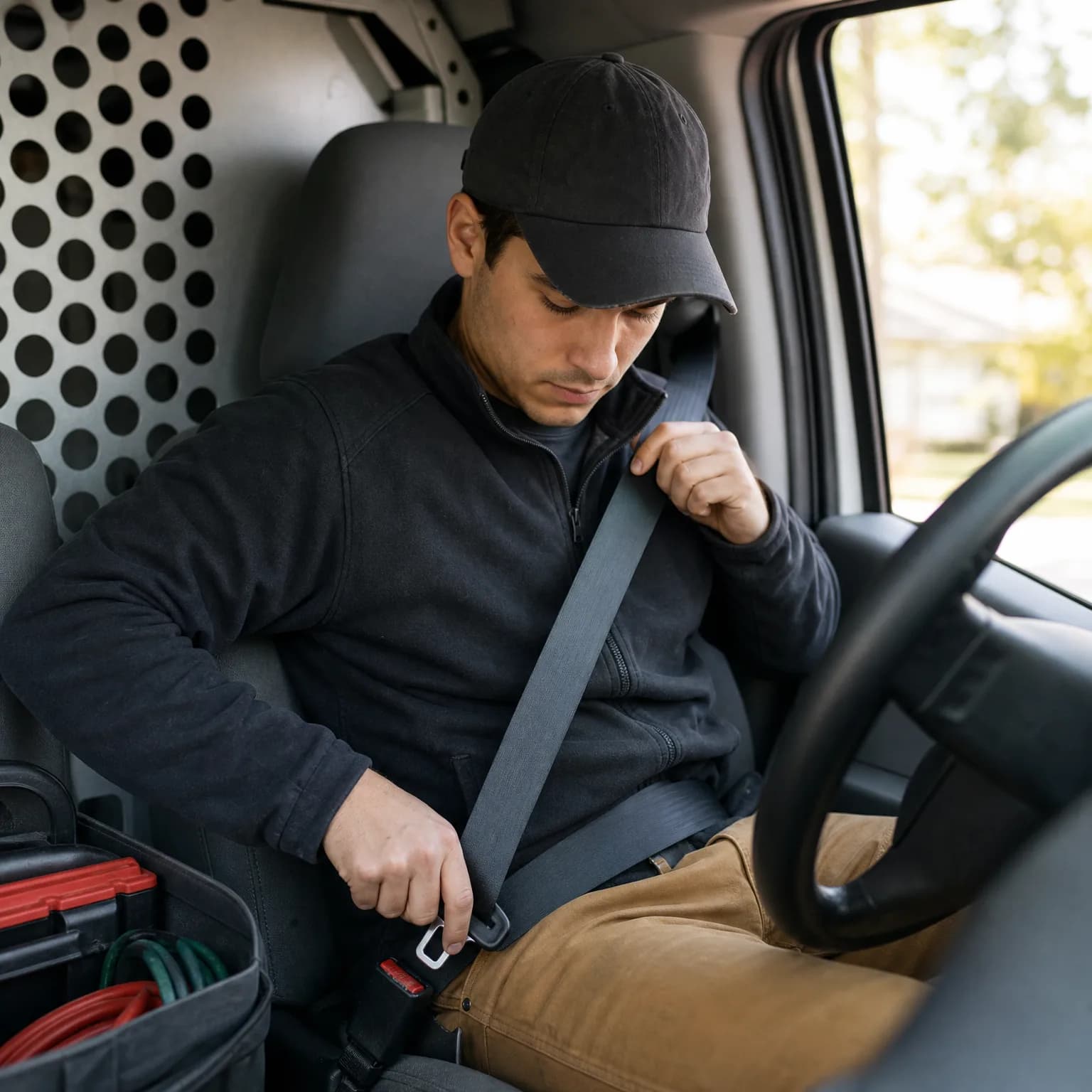

Coverage Decisions for Multi-Vehicle Households
If you choose to buy insurance, New Hampshire requires you to carry uninsured-motorist coverage and personal-injury protection in addition to liability. Uninsured-motorist coverage pays your medical bills and vehicle damage when an uninsured driver hits you. Given that 10 percent of New Hampshire drivers carry no insurance, this coverage protects you from paying out of pocket when the at-fault driver cannot.
Personal-injury protection covers your medical expenses and lost wages after an accident, regardless of fault. New Hampshire mandates PIP on every policy. These two coverages add cost beyond the liability minimums, but they close the gap the state's no-insurance rule creates: you're more likely to be hit by an uninsured driver here than in any other state except Mississippi and New Mexico.
For households insuring multiple vehicles, the decision to carry coverage on all cars or only some depends on asset exposure and driver history. If one driver has a violation requiring SR-22, that driver must carry coverage on any vehicle they operate. If the rest of the household drives uninsured, an accident involving one of those vehicles could trigger a suspension and force you to buy coverage retroactively at a higher rate. Carriers price post-accident policies higher than voluntary policies because the driver is now a known risk.
Combining all your household's vehicles on one policy typically lowers the per-vehicle cost through a multi-car discount, but only if every vehicle is titled to someone on the policy and garaged at the same address. If one vehicle is titled to a household member who does not appear on the policy, that vehicle may not qualify for the discount. Confirm with your carrier how they define a multi-car policy before assuming the discount applies.
15 carriers
Carriers Writing NH Multi-Vehicle Policies
Fifteen carriers write policies in New Hampshire for households with multiple vehicles, including Allstate, Farmers, Geico, Progressive, State Farm, and USAA. Not all write SR-22 certificates; confirm filing capability if a household member requires one.
New Hampshire carrier roster

SR-22 Filing and Multi-Car Policies
If one driver in your household is required to file SR-22, that driver must carry liability coverage meeting the state minimums for three years. The SR-22 is not a type of insurance; it's a certificate your carrier files with the DMV proving you carry coverage. Not all carriers write SR-22 policies. Of the fifteen carriers writing in New Hampshire, Allstate, Farmers, Geico, National General, Progressive, State Farm, and USAA explicitly confirm SR-22 filing capability.
The SR-22 requirement applies to the driver, not the vehicle. If the driver operates multiple vehicles, the policy must cover all of them. If the driver shares a household policy with other drivers who do not require SR-22, the certificate covers only the required driver, but the entire policy must meet the state minimums. Some carriers will not write a multi-car policy when one driver requires SR-22; others will but price the policy as high-risk across all vehicles. Compare carriers that write both multi-car and SR-22 policies to find one that prices each vehicle individually rather than applying the surcharge to the entire household.
Compare Carriers for Your Household
New Hampshire's financial-responsibility rule gives you flexibility, but it also shifts risk. If you choose to drive uninsured, you accept the risk that an at-fault accident will suspend your registration and force you to buy coverage at a higher rate. If you choose to insure, you pay for liability, uninsured-motorist, and PIP coverage that protects you from the 10 percent of drivers who carry nothing.
For households with multiple vehicles, the decision to insure all cars or only some depends on asset exposure, driver history, and whether any driver requires SR-22. Combining vehicles on one policy lowers cost through the multi-car discount, but only when every vehicle qualifies. Compare carriers that write multi-vehicle policies in New Hampshire and confirm how they define household eligibility, how they price SR-22 when required, and whether they discount each vehicle or apply a flat household rate.
What Financial Responsibility Means
New Hampshire accepts three forms of proof: a liability insurance policy meeting the state minimums, a surety bond for $50,000, or a cash deposit of $50,000 with the state treasurer. Most households choose insurance because the annual premium costs far less than tying up $50,000 in a state account. If you're required to file SR-22 after a violation, insurance is your only option — the state does not accept bonds or deposits in place of the certificate.
The state can demand proof of financial responsibility after any accident where you're at fault, even if no one is injured. If you cannot produce proof at the scene or within a short window afterward, the DMV suspends your registration and license. The suspension lifts only when you've either paid the claim in full or purchased insurance and filed proof with the state. For a household with multiple vehicles, a suspension on one driver can complicate coverage decisions across the entire policy.
Get Your Free Quote
Get My New Hampshire Car Insurance QuoteFrequently Asked Questions
Do I need car insurance to register a vehicle in New Hampshire?
No. New Hampshire does not require you to carry liability insurance to register or drive a vehicle. You must be able to prove financial responsibility if you're in an accident or if the state requests it after certain violations, but insurance is not mandatory for registration.
What are New Hampshire's minimum liability limits?
New Hampshire's statutory minimums are $25,000 bodily injury per person, $50,000 bodily injury per accident, and $25,000 property damage. These limits apply when you carry or are required to carry coverage, such as after a DWI conviction or when filing SR-22.
When am I required to carry car insurance in New Hampshire?
You must carry liability insurance and file SR-22 for three years after a DWI conviction, leaving the scene of an accident, or a second reckless-operation offense. You may also be required to buy coverage if you're in an at-fault accident and cannot prove financial responsibility.
Does New Hampshire require uninsured motorist coverage?
Yes. If you buy a liability policy in New Hampshire, the state requires you to carry uninsured-motorist coverage and personal-injury protection. These coverages protect you when an uninsured driver hits you, which is more common in New Hampshire than in most states.
Can I insure multiple vehicles on one policy in New Hampshire?
Yes. Most carriers writing in New Hampshire offer multi-car policies that discount the per-vehicle cost when you insure two or more vehicles on one policy. The discount typically requires every vehicle to be titled to someone on the policy and garaged at the same address.
What happens if I drive uninsured and cause an accident in New Hampshire?
If you cannot prove financial responsibility at the scene or shortly after, the DMV suspends your registration and license. The suspension stays in place until you pay the claim in full or buy insurance and file proof with the state. You'll likely pay higher rates for post-accident coverage.
Which carriers write SR-22 policies in New Hampshire?
Allstate, Farmers, Geico, National General, Progressive, State Farm, and USAA write SR-22 policies in New Hampshire. Not all carriers writing standard policies offer SR-22 filing, so confirm capability if a household member requires one.