
What Affects Car Insurance Rates — New Hampshire
Free to compare
Why Rate Factors Matter More in a Financial-Responsibility State
You're comparing quotes for two or three vehicles in New Hampshire, and the premiums vary wildly between carriers—sometimes by hundreds of dollars annually for the same household. New Hampshire is one of two states that doesn't mandate liability insurance for most drivers, so when you do choose to carry coverage, or when you're required to after certain violations, carriers price your risk differently than they would in a mandatory-insurance state.
The structural reality: carriers in New Hampshire write policies for two distinct populations—drivers who choose coverage voluntarily and drivers required to file proof after a DWI or other triggering event. Rate factors apply to both groups, but the weight each factor carries shifts depending on whether you're insuring by choice or by mandate. Understanding what moves your rate helps you structure coverage across multiple vehicles without paying for risk the carrier isn't actually assuming.
“A DWI on one driver's record re-rates every vehicle on the policy, even vehicles that driver never operates.”

Check Your Rate Against Other New Hampshire Drivers
Get My New Hampshire Car Insurance Quote$1,461.47
NH Average Annual Auto Expenditure
New Hampshire drivers spent an average of $1,461.47 per insured vehicle in 2023, below the national median. The figure reflects both voluntary and mandated coverage across all driver types.
NAIC state insurance statistics, 2023
Driving Record Weighs Heaviest When You're Required to Carry Coverage
Your driving record is the single largest rate factor in New Hampshire. A clean record positions you in the voluntary market where carriers compete for your business. A DWI conviction, leaving the scene of an accident, or a second reckless-operation offense triggers New Hampshire's SR-22 filing requirement—a three-year proof-of-financial-responsibility period during which you must maintain continuous coverage and your carrier must notify the state if your policy lapses.
Carriers price SR-22-required policies differently than voluntary policies. The filing itself costs nothing—it's an administrative certificate—but the underlying violation signals elevated risk, and carriers respond by moving you into a higher-rate tier or declining to write the policy at all. Fourteen of the fifteen carriers writing in New Hampshire handle SR-22 filings, but not all write competitively after a DWI. New Hampshire's state page details which carriers write post-violation coverage and how the three-year filing period works.
When you're insuring multiple vehicles and one driver on the policy has a violation, the entire policy re-rates. The multi-car discount still applies—most carriers reduce the premium when you insure two or more vehicles on one policy—but the base rate climbs for every vehicle because the household now carries elevated risk. The discount doesn't offset the violation surcharge; it reduces the total premium relative to what you'd pay insuring each vehicle separately at the higher base rate.
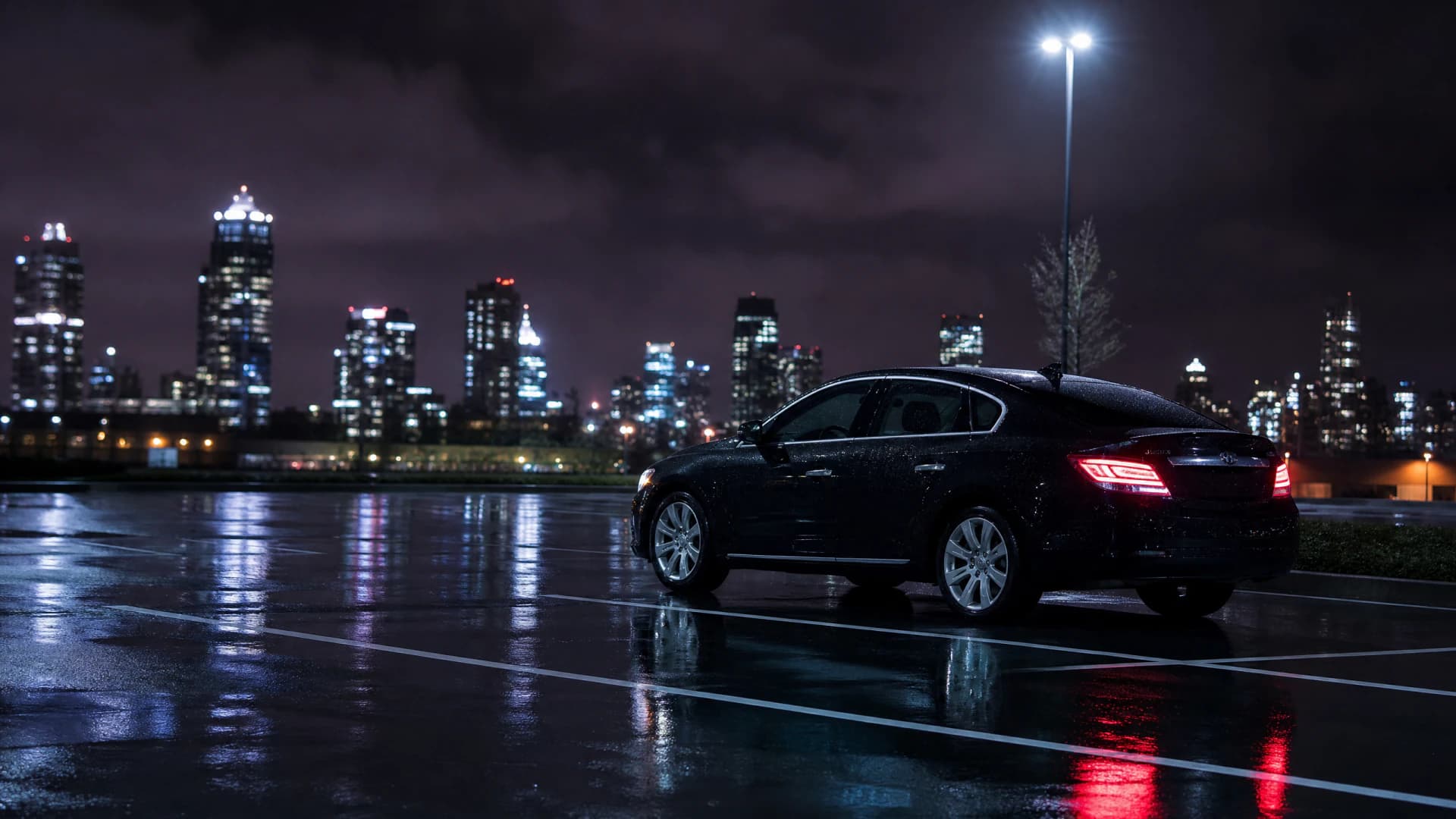
A DWI on one driver's record re-rates every vehicle on the policy, even vehicles that driver never operates.






Credit, Age, and Location Shape the Base Rate Before Discounts Apply
New Hampshire allows carriers to use credit-based insurance scores when setting rates. Your credit score doesn't appear on the policy, but carriers use it as a predictor of claim frequency. A higher score positions you in a lower-rate tier; a lower score moves you into a higher tier before any discounts apply. The multi-car discount reduces the premium after the base rate is set, so two households with identical vehicles and driving records can see different total premiums if their credit profiles differ.
Driver age affects rates at both ends of the spectrum. Households adding a newly-licensed teen driver see the largest single rate increase of any factor—teen drivers statistically file more claims than any other age group, and carriers price that risk into the household policy. At the other end, drivers over 65 may qualify for a mature-driver discount if they complete an approved defensive-driving course, but the discount is smaller than the teen surcharge and applies only to the individual driver, not the entire policy.
Your garaging address affects the base rate because carriers price by ZIP code. New Hampshire's 10% uninsured-motorist rate and its 64.9 vehicle thefts per 100,000 population in 2024 are statewide averages—actual theft and uninsured-driver rates vary by county and city. A vehicle garaged in Manchester faces different risk than one garaged in a rural town, and carriers adjust the base rate accordingly. When you insure multiple vehicles, all must be garaged at the same address to qualify for the multi-car discount.
10%
NH Uninsured Motorist Rate
Ten percent of New Hampshire drivers carried no insurance in 2023. The state's financial-responsibility system allows most drivers to self-insure, but uninsured-motorist coverage protects you when an at-fault driver has no policy.
Insurance Research Council, 2023

Coverage Limits and Deductibles Adjust the Premium Within Your Tier
New Hampshire's minimum liability limits—$25,000 per person for bodily injury, $50,000 per accident, and $25,000 for property damage—set the floor when you're required to carry coverage or choose to insure. The increase is typically smaller than the gap between minimum and no coverage, but it's not negligible when you're insuring three or four vehicles.
Collision and comprehensive deductibles work in reverse: a higher deductible lowers the premium because you're assuming more of the repair cost out of pocket. Choosing a $1,000 deductible instead of a $500 deductible reduces the collision and comprehensive premiums on each vehicle. When you're insuring multiple cars, the deductible applies per vehicle per claim—if two cars are damaged in the same incident, you pay two deductibles. Structuring deductibles across several vehicles requires balancing the premium savings against the cash you'd need to cover multiple claims.
Annual Mileage and Vehicle Use Affect Risk Assessment
Carriers ask how many miles you drive annually and how you use each vehicle—commuting, business, or pleasure. A car driven 15,000 miles a year for a daily commute presents more claim risk than one driven 5,000 miles for errands and weekend trips. When you insure multiple vehicles, carriers assess mileage and use per vehicle. If one car sits in the driveway most of the year and another logs 20,000 miles commuting, the premiums reflect that difference even though both vehicles are on the same policy.
New Hampshire's 13,281 million annual vehicle miles traveled in 2022 and its 0.96 traffic fatalities per 100 million miles are statewide figures—your household's actual mileage and use patterns determine how carriers price your specific policy. Misreporting mileage to lower your premium can result in a denied claim if the carrier discovers the discrepancy after an accident, so accuracy matters more than the modest premium difference between mileage bands.

Compare Carriers That Write Your Household's Profile
Fifteen carriers write auto insurance in New Hampshire, but not all write competitively for every household profile. Some specialize in clean-record voluntary policies; others write post-violation coverage but at higher rates. When you're insuring multiple vehicles, the carrier that offers the lowest rate for one car may not offer the best rate for the household as a whole, because the multi-car discount percentage and the base rate both vary by carrier. Comparing quotes from at least three carriers that write your specific profile—voluntary or required, clean record or post-violation—shows you the actual range of premiums your household qualifies for, not the advertised rates that assume a different risk profile than yours.
How Vehicle Count and Coverage Structure Interact
The multi-car discount applies when you insure two or more vehicles on the same policy, typically garaged at the same address. Most New Hampshire carriers reduce the per-vehicle premium by a percentage when you add a second car, and the discount grows slightly when you add a third. The discount is not a flat dollar amount—it's a percentage reduction applied to the base premium for each vehicle, so the actual savings depend on the base rate the carrier assigns your household.
Coverage structure matters because collision and comprehensive premiums vary by vehicle value, and liability premiums vary by the limits you select. If you carry full coverage on two newer vehicles and minimum liability on an older third car, the total premium reflects the higher collision and comprehensive costs on the first two vehicles plus the lower liability-only cost on the third. Carriers re-rate the entire policy when you add or remove a vehicle mid-term, so the timing of adding a car affects whether you pay the new rate immediately or at renewal.
Get Your Free Quote
Get My New Hampshire Car Insurance QuoteFrequently Asked Questions
Does New Hampshire require car insurance for all drivers?
No. New Hampshire is a financial-responsibility state—most drivers are not required to carry insurance but must prove financial responsibility if involved in an accident. Drivers convicted of DWI, leaving the scene of an accident, or a second reckless-operation offense must file SR-22 proof of insurance for three years.
How does a multi-car discount work in New Hampshire?
The multi-car discount reduces your per-vehicle premium when you insure two or more vehicles on the same policy, typically garaged at the same address. The discount is a percentage applied to each vehicle's base rate, so the actual savings depend on your household's rate tier and the coverage you carry on each car.
Will adding a teen driver increase my rate for all vehicles?
Yes. Adding a newly-licensed teen driver re-rates the entire household policy because the teen is a listed driver with access to all vehicles on the policy. The increase is the largest single rate factor, and it applies even if the teen primarily drives only one of the household's cars.
Can I insure vehicles garaged at different addresses on one policy?
Typically no. Most carriers require all vehicles on a multi-car policy to be garaged at the same address to qualify for the multi-car discount. If household members live at different addresses, you may need separate policies for vehicles garaged at each location.
How does my credit score affect my New Hampshire car insurance rate?
New Hampshire allows carriers to use credit-based insurance scores when setting rates. A higher score places you in a lower-rate tier before any discounts apply. Two households with identical vehicles and driving records can see different premiums if their credit profiles differ.
What happens to my rate if I'm required to file SR-22 in New Hampshire?
The SR-22 filing itself costs nothing, but the underlying violation—typically a DWI—signals elevated risk and moves you into a higher-rate tier. Fourteen of fifteen New Hampshire carriers handle SR-22 filings, but not all write competitively after a violation. The three-year filing period requires continuous coverage; any lapse restarts the clock.