
New Car Insurance Requirements — New Hampshire
Free to compare
The New Car Insurance Question New Hampshire Buyers Face
You bought a new car in New Hampshire and now you're trying to figure out when insurance must be in place. The dealer may have told you to call your carrier immediately. Your lender sent paperwork requiring proof of coverage. But New Hampshire doesn't require most drivers to carry insurance at all, so what's actually mandatory and what's just standard practice?
The answer depends on whether you financed the vehicle and whether you already have a driving record that triggers New Hampshire's financial-responsibility requirements. Most buyers face a 10-day registration window and a lender's coverage mandate, not a state insurance requirement. This article walks you through the actual timing rules, the lender's role, and how to structure coverage when you're adding a vehicle to a household that already insures multiple cars.
“Your lender requires coverage from the moment you sign the loan, not when the state says you need it.”

Check Your Rate Against Other New Hampshire Drivers
Get My New Hampshire Car Insurance Quote$25,000 / $50,000 / $25,000
New Hampshire Minimum Liability Limits
New Hampshire sets minimum liability limits at $25,000 per person for bodily injury, $50,000 per accident, and $25,000 for property damage. These limits apply when a driver is required to carry coverage or chooses to buy a policy.
New Hampshire Department of Safety
New Hampshire Does Not Require Most Drivers to Carry Insurance
New Hampshire is a financial-responsibility state. Most drivers are not required by law to buy liability insurance. Instead, you must be able to prove financial responsibility if you cause an accident or if the state requires proof after certain violations. Financial responsibility can be demonstrated through insurance, a bond, or cash deposit, but insurance is not mandatory for everyone.
This changes if you have a DWI conviction, certain other violations, or if you caused an accident and could not pay for damages. In those cases, New Hampshire requires you to file proof of financial responsibility, typically through an SR-22 certificate, and maintain coverage for three years. For most new car buyers with clean records, no state-level insurance requirement exists.
The confusion arises because lenders, dealers, and registration clerks all assume you have insurance. Lenders require it as a condition of the loan. Dealers often won't let you drive off the lot without proof of coverage. But the state itself does not mandate it unless your driving record triggers the requirement.

Your lender requires coverage from the moment you sign the loan, not when the state says you need it. That contractual obligation creates the real deadline most buyers face.
Related Articles
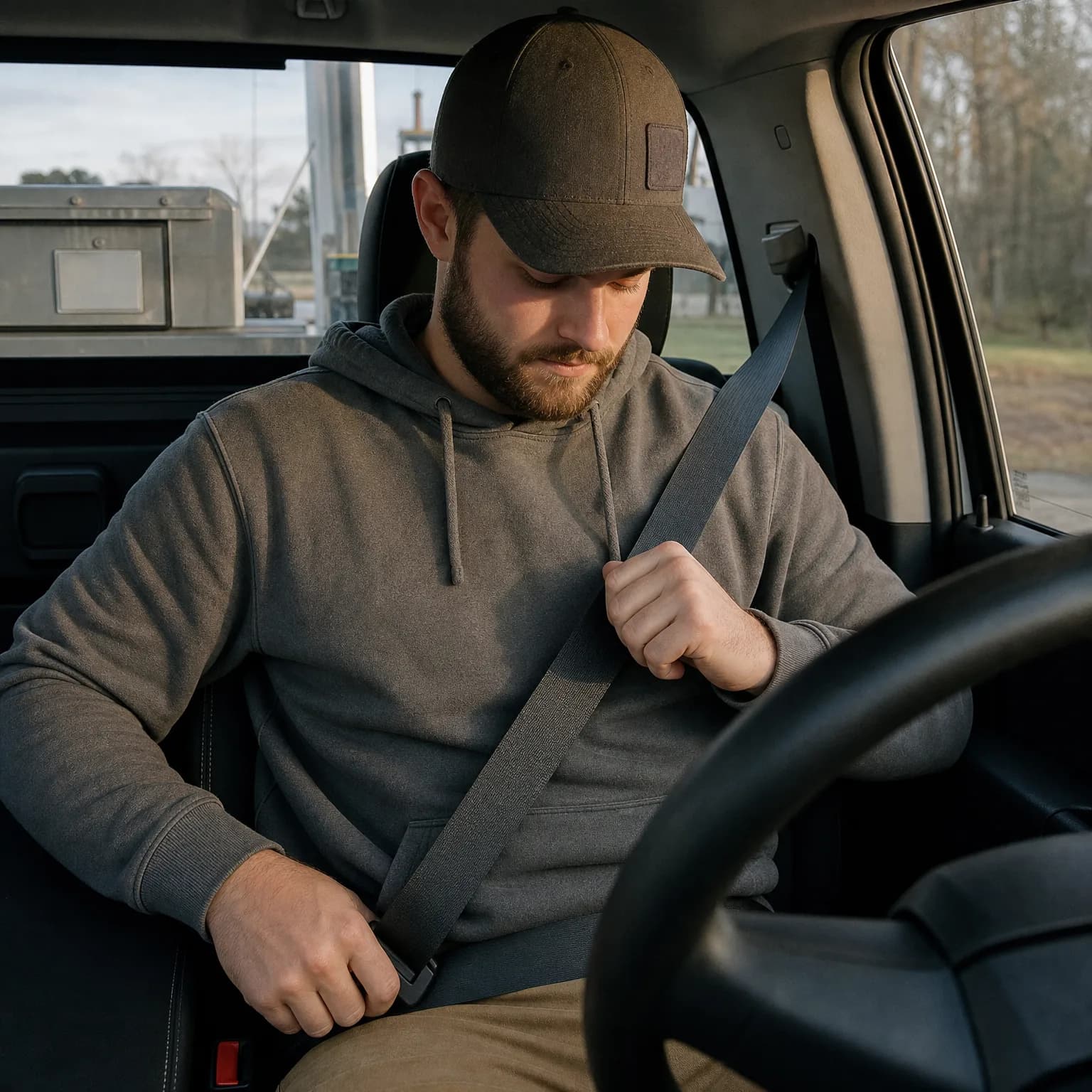




Adding a New Car to an Existing Multi-Vehicle Policy
If you already insure one or more vehicles, most carriers give you a grace period to report the new car and add it to your policy. Grace periods typically range from 7 to 30 days depending on the carrier, and during that window the new vehicle is covered under your existing policy's terms. This grace period applies only if you already have a policy in force. If you do not currently carry insurance, you must buy a policy before taking delivery of the financed vehicle.
Adding the new car re-rates your entire policy, not just the new vehicle. The carrier recalculates your premium based on the new vehicle's make, model, year, and how it will be used. If you qualify for a multi-car discount, adding a second or third vehicle often lowers the per-vehicle cost, but the total premium still increases. Carriers apply the multi-car discount when every vehicle sits on the same policy and shares a garaging address, so confirm with your carrier that the new car qualifies.
Report the new vehicle to your carrier within the grace period even if you have not received the title or permanent plates yet. Provide the VIN, purchase date, and financing details. The carrier will add the vehicle retroactively to the purchase date and adjust your premium. Missing the grace period can leave you without coverage if an accident occurs before you report the car, and it may violate your lender's requirement.
15 carriers
New Hampshire Multi-Vehicle Carriers
Fifteen carriers write multi-vehicle policies in New Hampshire, including Allstate, Geico, Progressive, State Farm, and USAA. Compare quotes from carriers that write your household's vehicle count and coverage needs before adding the new car.

When You Must Buy a New Policy Instead of Adding to an Existing One
You need a new policy if you do not currently carry insurance, if your existing policy does not cover the type of vehicle you bought, or if the new car will be titled to someone not listed on your current policy. A new policy must be in place before the lender releases funds. Shop for quotes before you finalize the purchase so you know the cost and can bind coverage immediately after signing the loan.
If the new car will be driven primarily by a household member not currently on your policy, adding that driver and the vehicle to your existing policy may raise your premium more than starting a separate policy for that driver. Compare both options. Carriers calculate multi-car discounts based on every vehicle and driver on the same policy, so splitting vehicles across two policies usually costs more in total, but in some cases a high-risk driver on a separate policy costs less than adding them to a preferred-tier family policy.
What Happens If You Drive Without Meeting the Lender's Coverage Requirement
Driving a financed vehicle without the comprehensive and collision coverage your lender requires violates the loan contract. The lender can place force-placed insurance on the vehicle, which covers only the lender's interest, not your liability or your own damages, and costs significantly more than a standard policy. The lender adds the cost to your loan balance. Force-placed insurance does not satisfy New Hampshire's financial-responsibility requirement if you are subject to one, because it does not include liability coverage.
If you cause an accident while driving uninsured and you are not subject to New Hampshire's financial-responsibility requirement, you are personally liable for all damages. New Hampshire does not suspend your license for driving without insurance unless you caused an accident and could not pay, or unless you are already required to file an SR-22 and failed to maintain coverage. But the financial risk is yours, and the lender's remedies for contract violation remain in force. Meet the lender's requirement from day one to avoid both financial exposure and loan default.
The 10-Day Registration Window and Lender Coverage Requirements
The 10-day registration window is a DMV rule, not an insurance rule. You must register the vehicle within 10 days of purchase or face late fees and potential penalties. Registration does not require proof of insurance for most drivers, but it does require proof of identity, the bill of sale, and payment of registration fees. The registration clerk may ask if you have insurance, but unless you are required to file an SR-22, you are not obligated to show proof at the counter.
Your lender's requirement is different. The loan contract requires you to carry comprehensive and collision coverage with the lender named as loss payee. This coverage must be in place before the lender releases funds, which in practice means before you drive the car off the lot. The lender does not care that New Hampshire does not mandate insurance. The loan contract does, and violating it can trigger a default. Most buyers satisfy this requirement by adding the new car to an existing policy or buying a new policy before signing the loan paperwork.
Get Your Free Quote
Get My New Hampshire Car Insurance QuoteFrequently Asked Questions
Does New Hampshire require me to have car insurance when I buy a new car?
New Hampshire does not require most drivers to carry car insurance. You must be able to prove financial responsibility if you cause an accident or if your record triggers a filing requirement, but insurance is not mandatory for most buyers. Your lender requires it as a condition of the loan.
How long do I have to add a new car to my existing insurance policy in New Hampshire?
Most carriers give you 7 to 30 days to report a new car and add it to your existing policy. During that grace period the new vehicle is covered under your current policy's terms. Report the car within the grace period to avoid a coverage gap.
What coverage does my lender require for a financed car in New Hampshire?
Lenders require comprehensive and collision coverage with the lender named as loss payee. This coverage must be in place before the lender releases loan funds. Liability-only coverage does not satisfy the lender's requirement even though New Hampshire does not mandate insurance for most drivers.
Can I register a new car in New Hampshire without proof of insurance?
Yes, unless you are required to file an SR-22. New Hampshire does not require proof of insurance to register a vehicle for most drivers. You have 10 days from the purchase date to register the car. Your lender's coverage requirement is separate from the state's registration rules.
What happens if I drive a financed car without the insurance my lender requires?
Driving without the lender-required coverage violates your loan contract. The lender can place force-placed insurance on the vehicle, which covers only the lender's interest and costs significantly more than a standard policy. The cost is added to your loan balance.
Does adding a second car to my policy lower my rate in New Hampshire?
Adding a second car increases your total premium but often lowers the per-vehicle cost through a multi-car discount. Carriers apply the discount when every vehicle sits on the same policy and shares a garaging address. Compare quotes before adding the car to see the actual cost.